
When I photograph a destination residence for Exclusive Resorts, I almost always ask the same question on the ground: does this home want to be seen in daylight, or does it want to be seen at dusk? There is no right or wrong answer. Day versus dusk is about feeling and vibes. One frame can feel open, honest, and full of place. The other can feel intimate, glowing, and inviting. Both can be true for the same architecture.
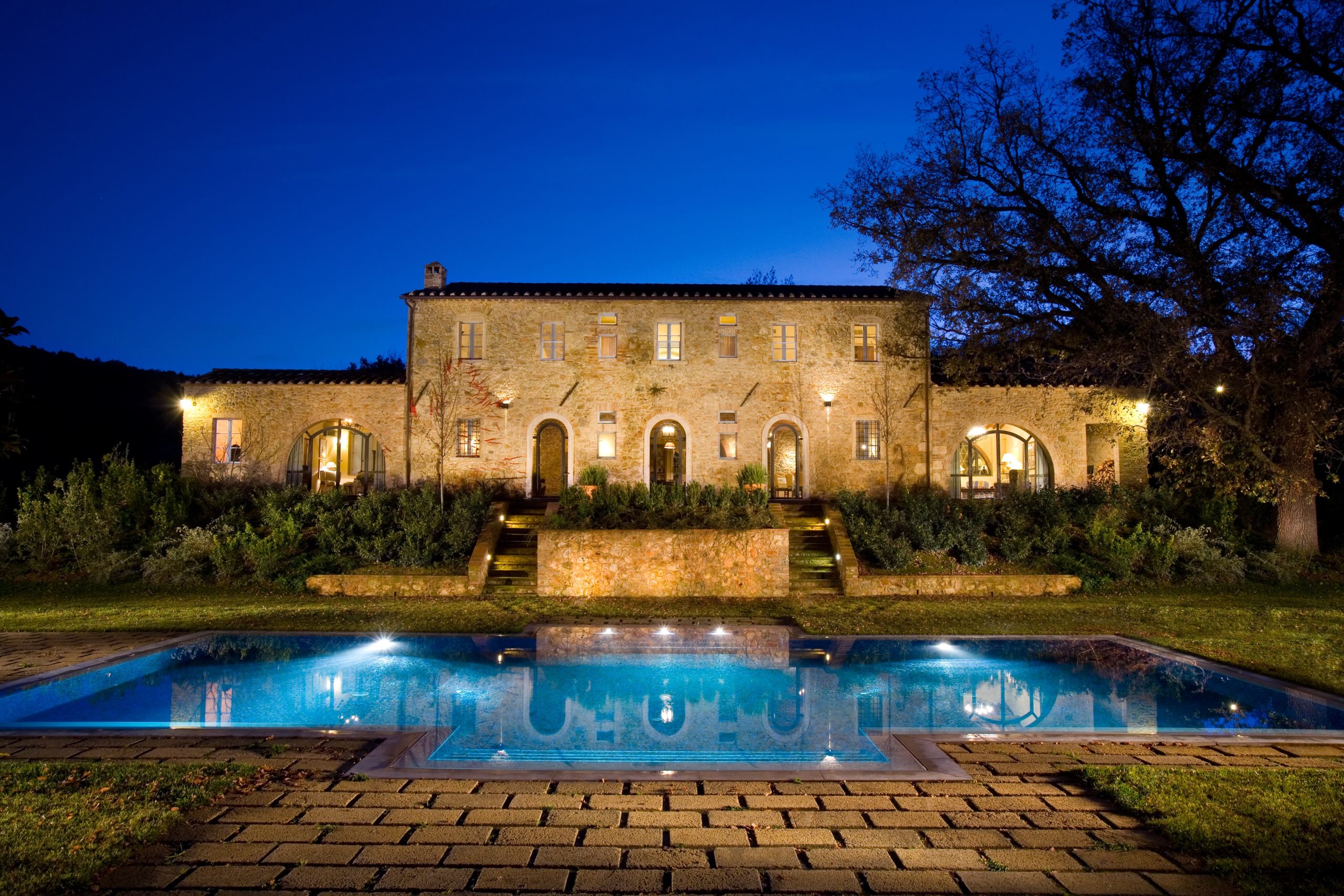
At Casali di Casole in Tuscany, I photographed the Paradiso residence, labeled Pard in our Exclusive Resorts finals, from the same camera position in day and at dusk. The stone villa sits across the pool. The paving, the stairs, the autumn tree, and the hillside hold their place in both frames. What changes is the emotion. That side by side is the cleanest way I know to talk about the choice.
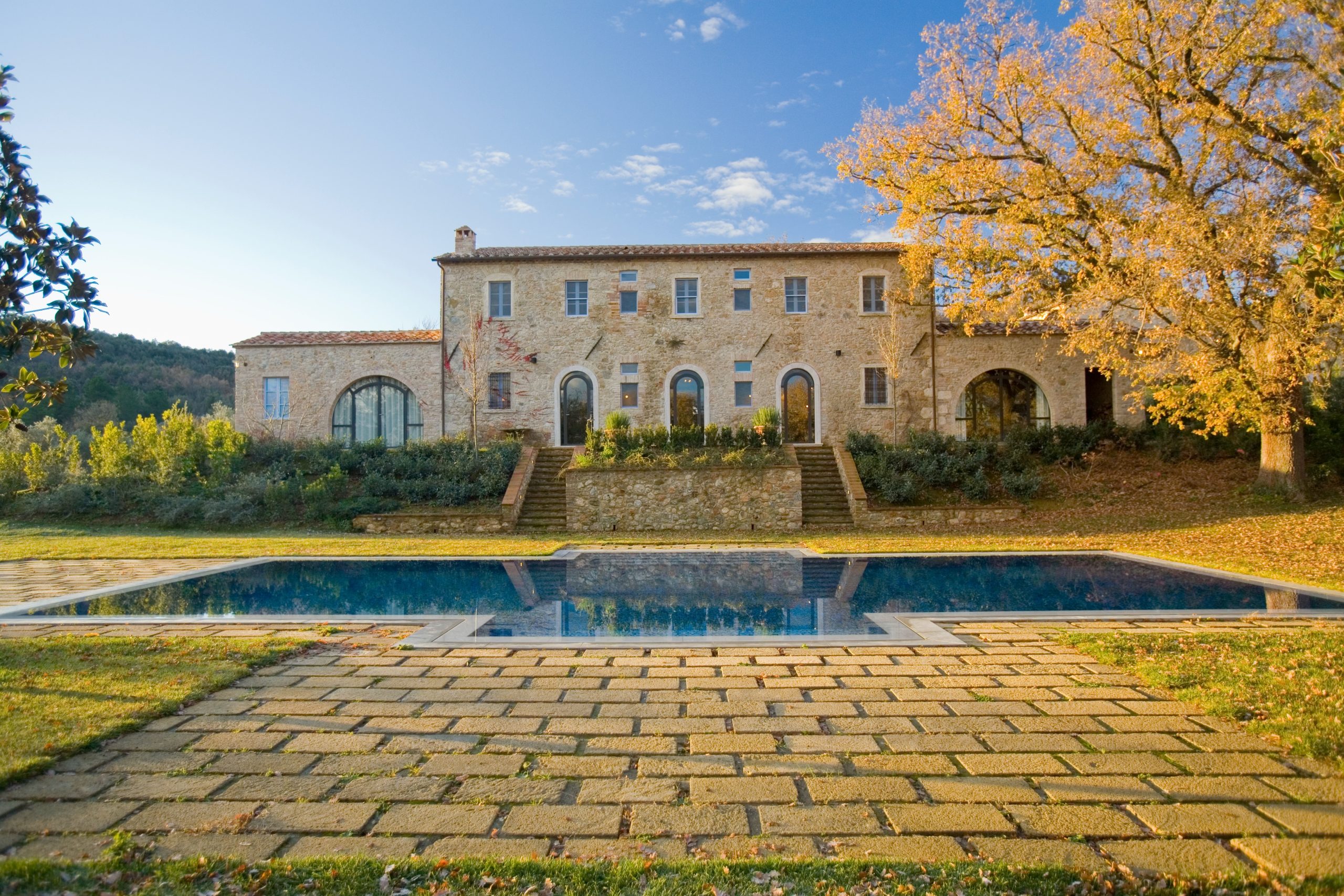
Daylight photography is a conversation with the sun. I watch direction first. Where does the sun rake the stone? Where does it flatten the facade? Where does it throw hard shadow across the pool? Time of day matters as much as the lens. Morning and late afternoon can sculpt form. Midday can wash a wall flat. I use fill when I need to open a shadow without killing the sun’s shape, and I balance bright exteriors against interiors so a room beyond glass still feels lived in. On a clear Tuscan day like this one, the architecture can carry the story with honest materials, honest landscape, and a sky that still has weather in it.
Dusk asks for a different kind of presence. The blue hour is short. I spend real time shaping continuous light on the facade, the pool, the stairs, and the rooms so warm interior glow meets cool sky. If a property faces north, or sits where daylight never gives a flattering face, dusk is often the stronger option. Soft even day light can leave a home looking unfinished. A carefully lit dusk frame can give that same home mood, depth, and a reason to linger.
Good architectural lighting on the property is a factor too. When the residence already has strong exterior fixtures, path lights, and pool light, dusk moves faster and the photograph stays honest to how a guest will experience the place after dark. When a property does not have existing good lighting and I have to light it myself, the job takes more time and costs more money. That is not a complaint. It is part of the craft. Hours can go into a single dusk exterior so the mood holds for a few perfect minutes.
Underneath all of it, this is really about qualities of light and the feeling each one gives you. Crisp daylight feels fresh, open, and true to place. The warm, raking light of late afternoon feels golden and nostalgic. Dusk, with the sky turning deep blue while the windows glow amber, feels romantic and expectant, like the evening is just beginning. True night, once the sky goes dark, feels intimate and private, a little cinematic, with the architecture defined only by the light I give it. None of those qualities happen by accident, and each one takes a different amount of time to create.
Dusk is by far the most extensive of the three. A day frame can come together with me, a camera, a little fill, and patience for the sun. A dusk frame is a production. It takes a team, with assistants placing and adjusting lights across the facade, the pool, the landscaping, and every room that shows through the glass, often running between lights while I call changes from the camera. It takes lighting, sometimes a lot of it, planned in advance and refined all afternoon so everything is ready when that short blue window opens. And it takes far more post production. I capture a series of exposures, each one built for a different part of the scene, then carefully layer that light together, the sky from one frame, the glow of the interiors from another, the pool and the stone from others, until the final image feels like one perfect moment. To put it in real numbers, one daytime shot might take me about an hour of retouching. One dusk shot with light layering can be hours and hours of retouch. That difference is a big part of why a dusk exterior carries the weight it does.
That is also why dusk costs more, plain and simple. The team costs more, the extensive lighting and the hours each shot takes cost more, and the post production light layering costs more. So every project comes down to a cost benefit analysis. I walk my clients through it honestly. Sometimes a beautiful day frame tells the story perfectly and the budget goes further. Sometimes a property, a north facing facade, or the feeling a brand wants to sell makes the dusk frame worth every dollar. Either way, at the end of the day dusk costs more, and I want my clients to choose it knowing exactly what that investment buys them.
Styling is part of that craft on both sides of the day. On an elaborate architecture assignment for my company Studio J Inc., I stay hands on with the scene. I roll bath towels, pour iced tea, cut lemons, set fruit and flowers where they read as hospitality rather than clutter, and keep making the rooms comfortable and enticing until the photograph feels like a place you would want to step into. I often drop the camera low and close, near a chaise or along the stone paving, so the viewer feels invited rather than held at a distance. Between the day frame and the dusk frame, that styling shifts with the light. Day styling stays quieter so sun, stone, and landscape lead. Dusk styling leans into warmth, soft practical light in the rooms, and a more dramatic lighting plan so the villa feels alive against the blue sky.
I love both versions of Paradiso. The day frame feels like arrival in Tuscany. The dusk frame feels like the evening you hope Exclusive Resorts members will remember. Choosing between them is not about which photograph is correct. It is about which feeling the project needs to carry. See more of my residential architectural photography, explore the wider architecture portfolio, read about Studio J Inc., or contact me when you have a destination residence or a lighting driven architecture project coming up.
Photography for Exclusive Resorts at Casali di Casole in Tuscany. Photography by Studio J Inc.
Studio J Inc. has been capturing architectural photography for 26 years in Las Vegas and around the world. If you have any questions about this project, or about a similar upcoming project, please don’t hesitate to contact Eric Jamison.
0 Comments