
A golf course is architecture laid across the land, and when I photograph one in daylight I read it the same way I read a building. The routing, the bunkers, the greens and the water were all designed by someone, and my job at Studio J Inc. is to find the hour and the angle where that design reveals itself. Architectural golf course photography is some of the most rewarding work I do, because the canvas is hundreds of acres wide and the light changes every minute.
My night golf course work at Shadow Creek is about building light where there is none. This post is its daylight counterpart, where the sun does the lighting and my part is to be standing in exactly the right place when it does.
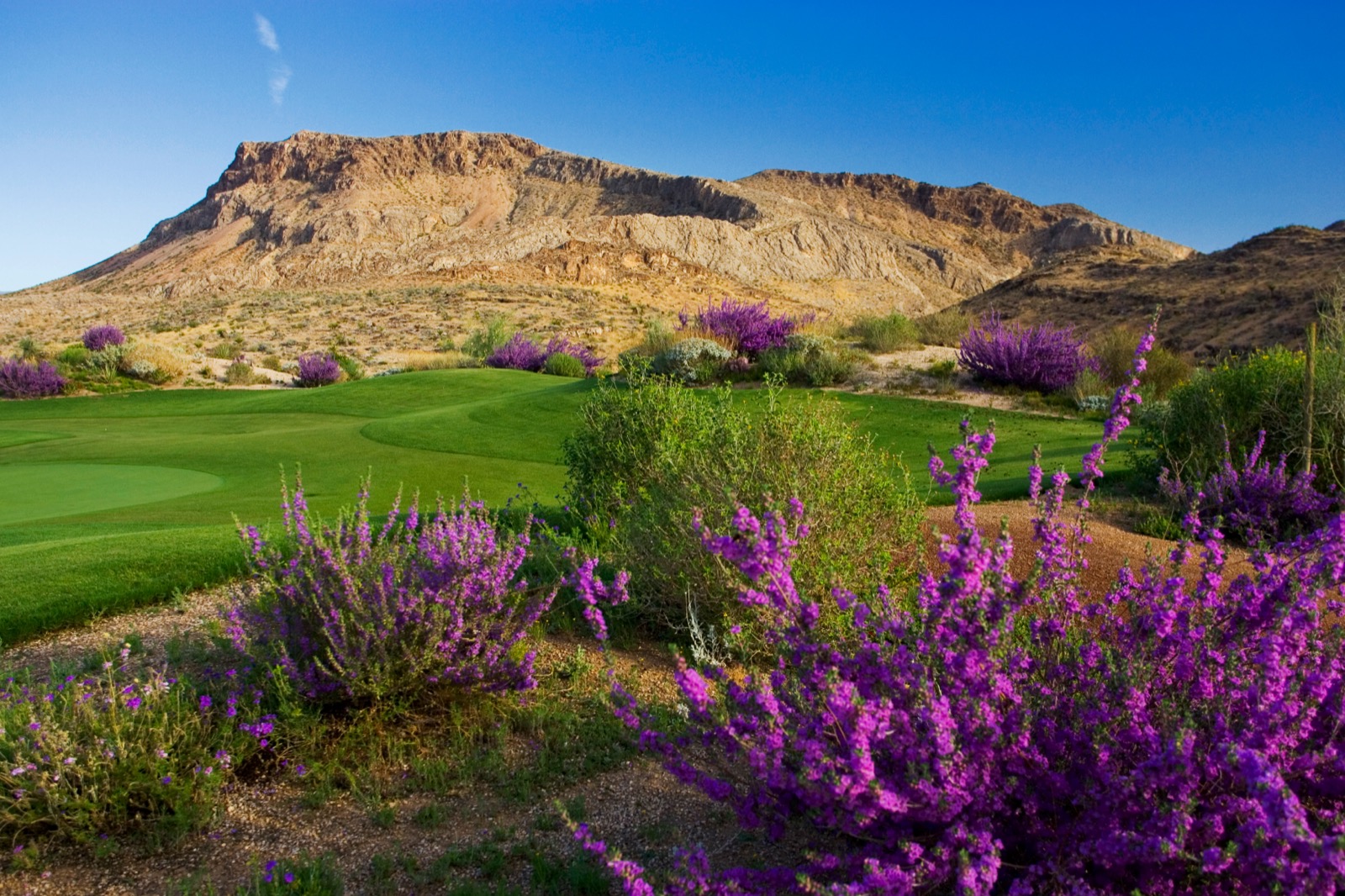
Early morning light is my favorite on a desert course. The sun comes in low from the side, the mesa glows, and the purple sage in the foreground pulls you into the frame and down onto the green. A few hours later that same view goes flat, so I am there at sunrise and I work fast.
An oceanside course in Los Cabos
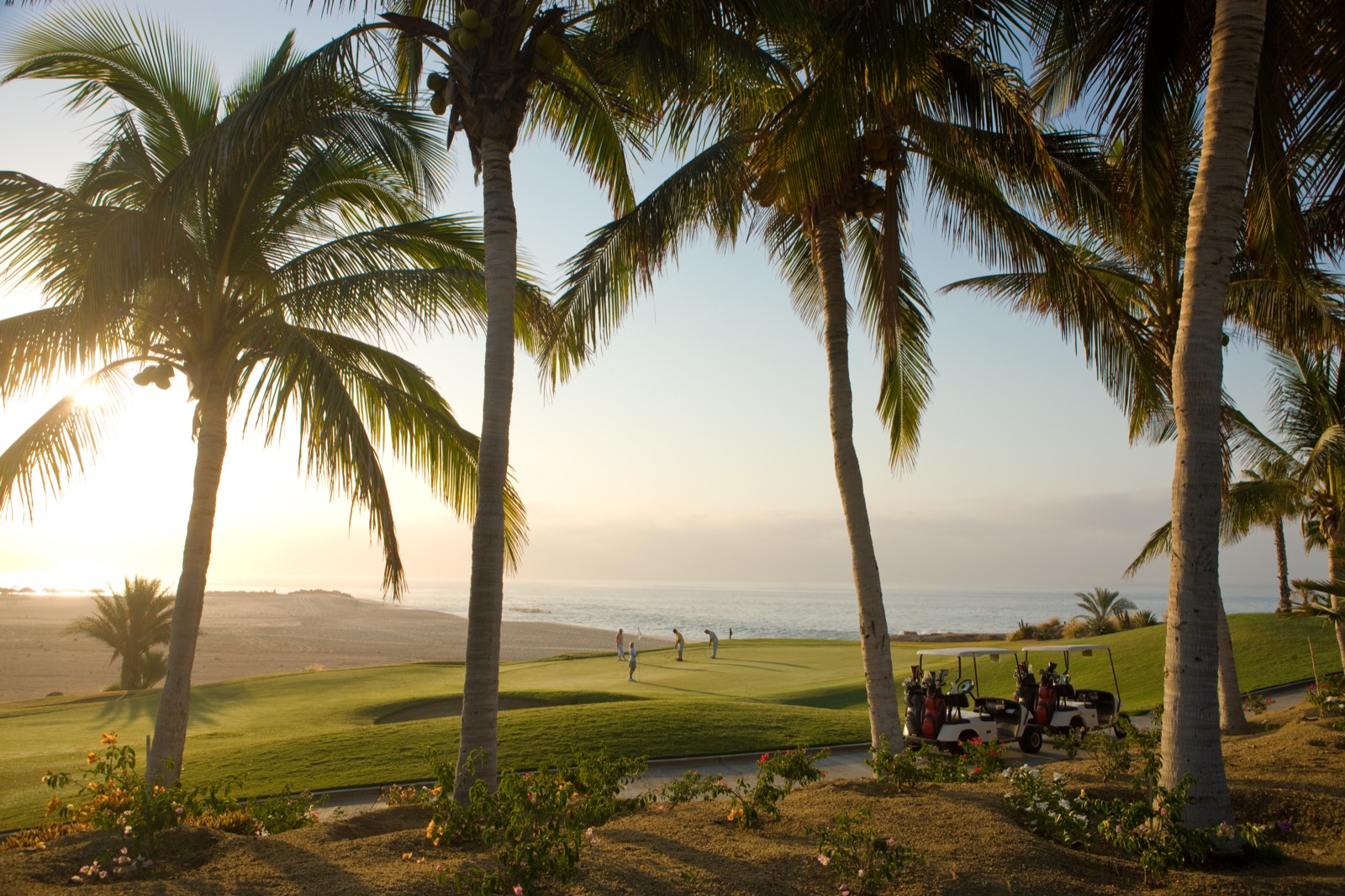
This is one of my favorite frames in my archive. I made it in 2008 at Cabo Real Golf Club in Los Cabos while shooting for Exclusive Resorts, on a course that runs right along the ocean. I set up under the palms with the sun low behind the fronds, so the fairway, the trees and the water read as one designed landscape. On a course like that the ocean is part of the architecture, and I wanted the photograph to feel like you were standing there with the sea breeze in your face.
Straight down over Edgewood Tahoe
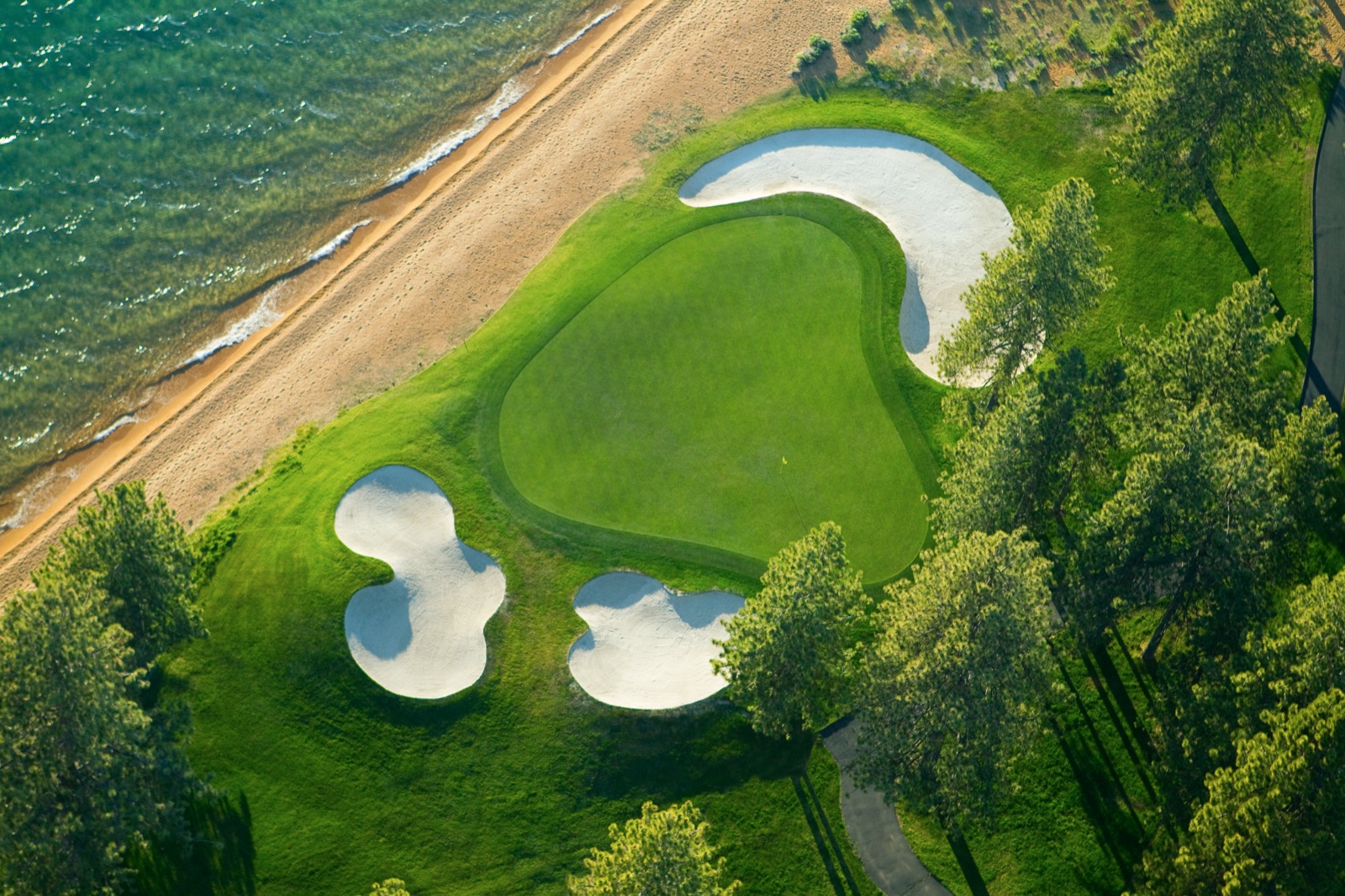
The air gives me a view no golfer ever gets. In June 2012 I flew helicopter aerials over Lake Tahoe for Caesars Entertainment while photographing Harrah’s Lake Tahoe and Harveys Lake Tahoe, and this frame looks straight down on Edgewood Tahoe Golf Course, where the green sits right against the shoreline. From above, the bunkers, the green and the edge of the lake read as one composition, which is exactly how a great course is designed.
Desert light at DragonRidge
I have been photographing golf courses in and around Las Vegas since the early days of Studio J Inc., and the desert has taught me more about light and shadow than anything else.
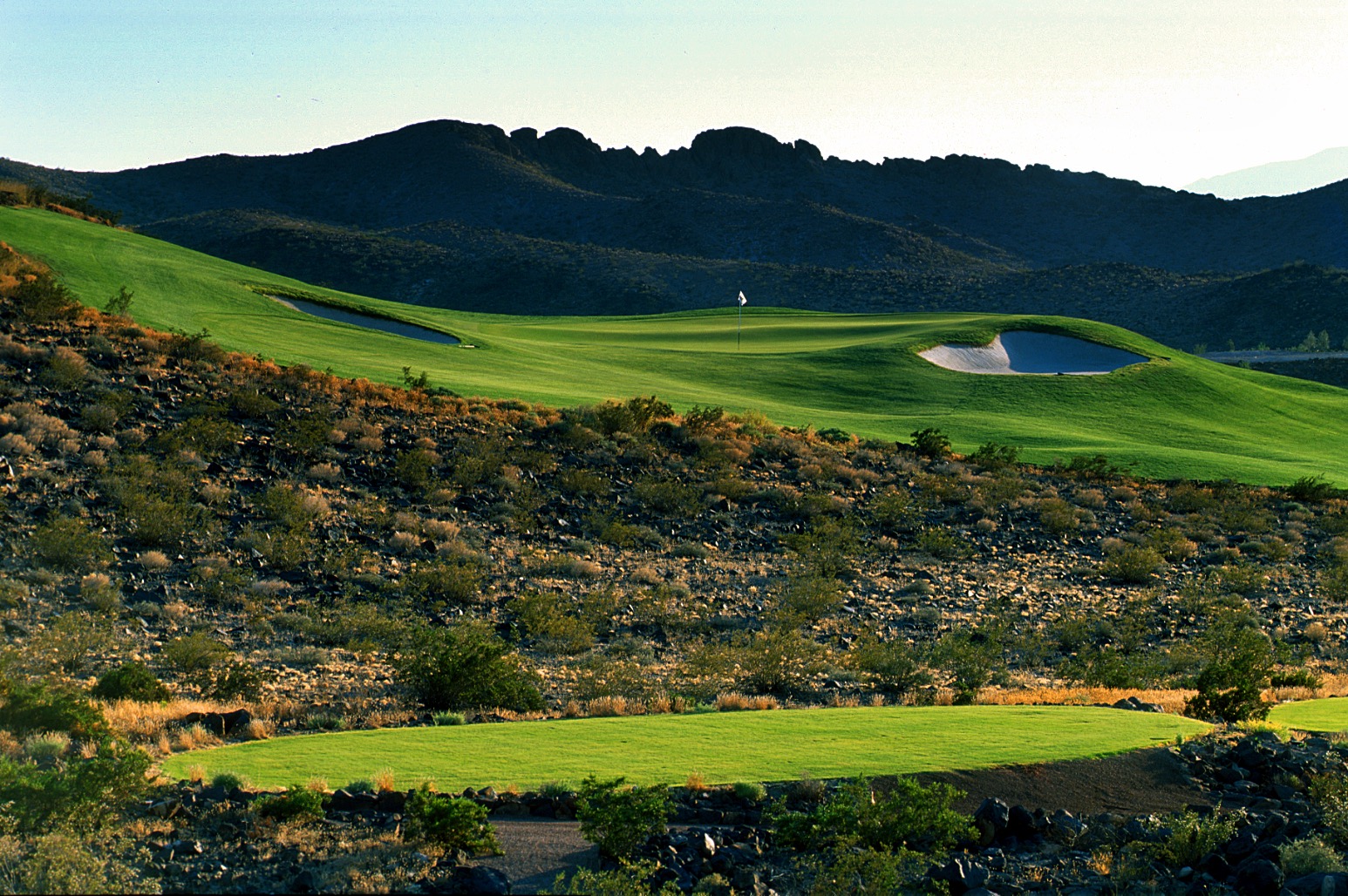
I still count this as one of my better frames. On the 14th hole at DragonRidge Country Club in 2000, the green sits below the ridgeline, and the side light separates the layers of fairway, desert and mountain.
Sun angle is everything
Time of day matters more on a golf course than almost anywhere else I work. At noon the sun sits overhead and every slope goes flat. When it drops low and rakes across the land from the side, the mounding, the bunker lips and the breaks in the greens all come alive in light and shadow. I will walk a hole for an hour looking for the one spot where the bunkers, the green and the backdrop line up, and then I wait for the light to arrive there. A single frame can take hours. Being present on the course for those few minutes is the whole job.
Reading the routing at SouthShore
In November 2024 I spent several days photographing SouthShore Country Club at Lake Las Vegas for Tri Pointe Homes. SouthShore is a Jack Nicklaus Signature course, and its holes wind between the lake, the desert and the mountains. Before I made a single frame, we built a shot list hole by hole around the sun: which greens to shoot straight down from the drone, which tee boxes to catch in the hour before sunset, and which holes needed the early morning light.
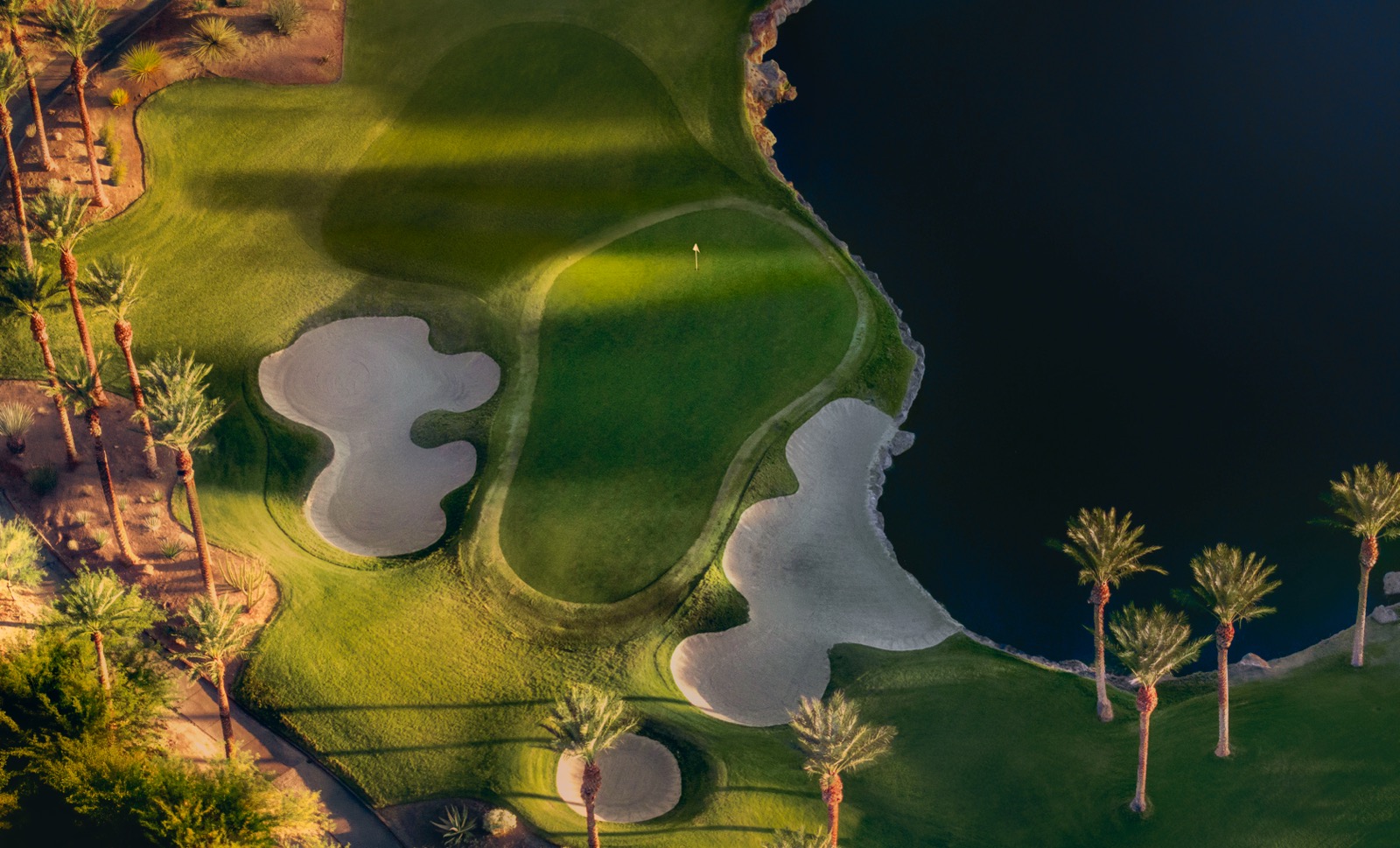
Straight down from the drone, a green and its bunkers become pure shape. Late afternoon sun throws the palm shadows long across the turf, and those shadows are what give the bunker faces and the contour of the green their depth. An hour earlier, the same frame would have been flat.
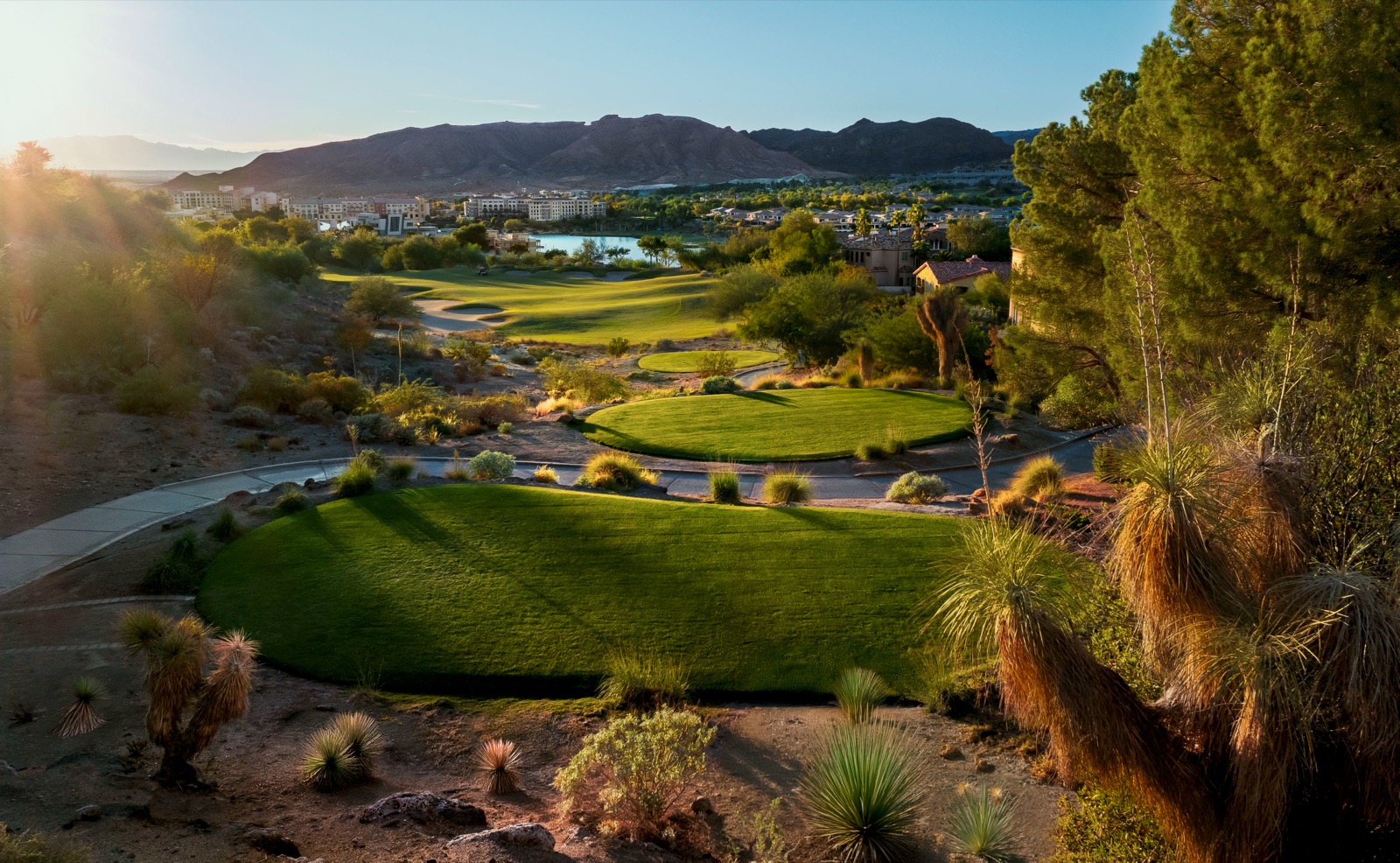
Lifting the drone just above the tee box lets you see the hole the way the architect drew it, from tee to landing area to green, with the lake and the mountains closing out the view. Ground views tell you how a hole feels to play, and aerials tell you how it was designed. A complete golf course set needs both.
More desert courses
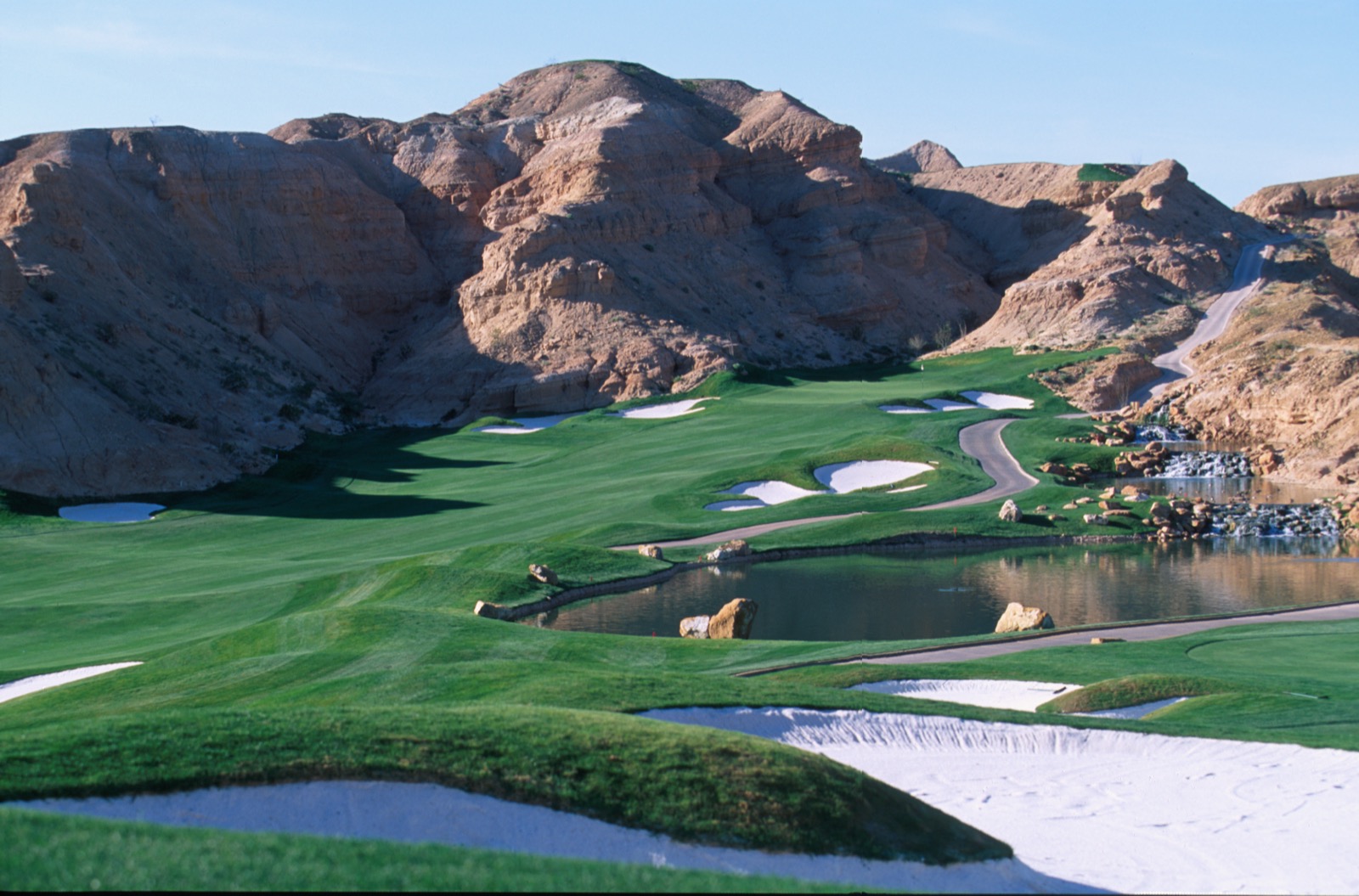
At Wolf Creek Golf Club in Mesquite, in 2001, the canyon walls are the architecture as much as the fairways are. I worked the angle until the sun lit the rock and let the white bunkers and the water lead your eye up into it.
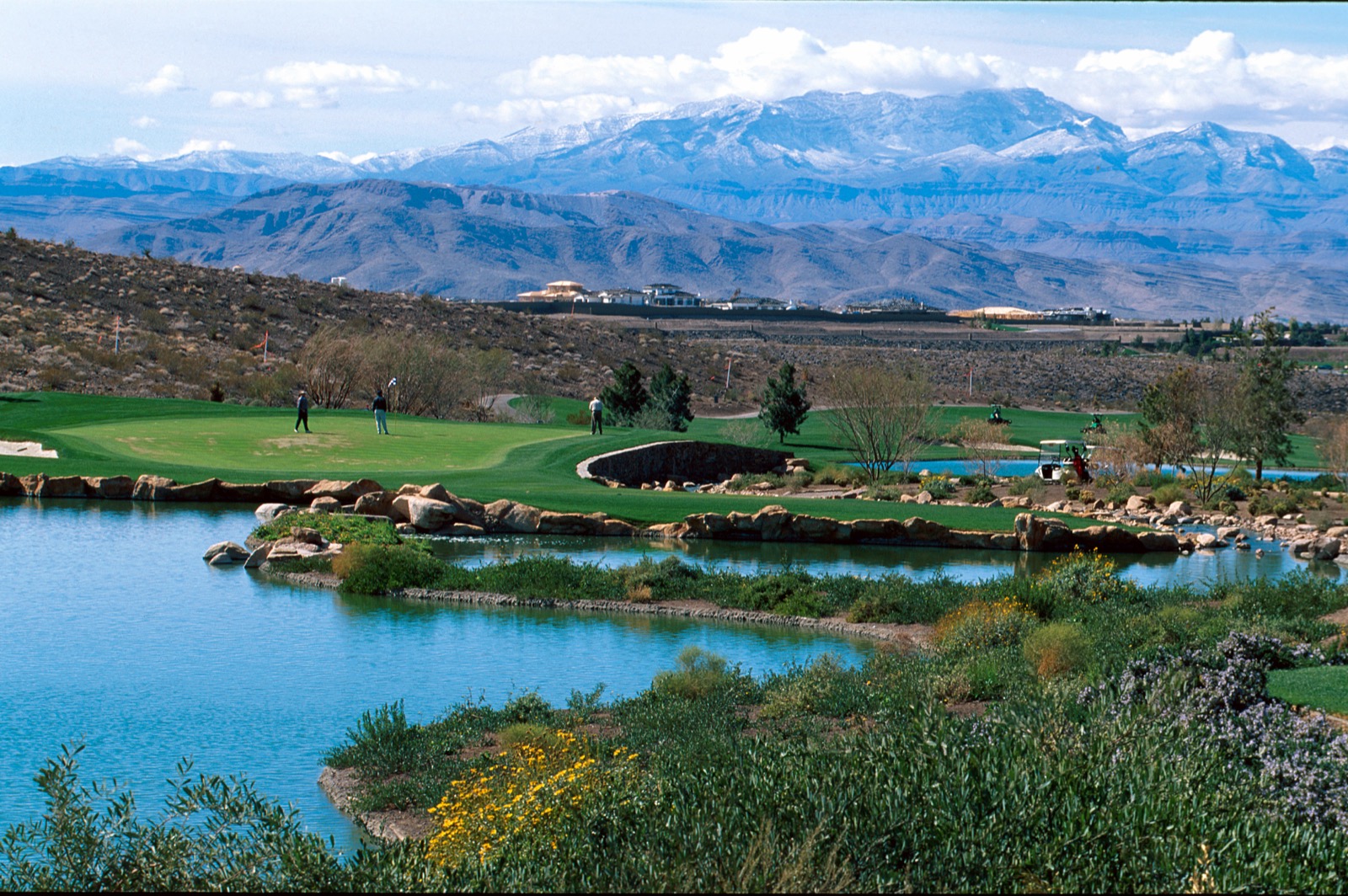
At Anthem Country Club in 2000, a clear sky and fresh snow on the distant mountains gave me a backdrop I could only have planned around, never forced.
A clubhouse is the one true building on a golf course, and I treat it like any piece of resort architecture: find the side the sun favors, and let the water and the fairway lead your eye straight to it.
The same discipline everywhere
Whether I am standing on a fairway, photographing a high rise condo at the Waldorf Astoria, documenting restored farmhouses at Casali di Casole, or lighting Loewe at The Crystals, the discipline is the same. Read the architecture, wait for the light, and be there when it arrives.
Studio J Inc. has been capturing architectural golf course photography for 26 years in Las Vegas and around the world. If you have any questions about this project, or about a similar upcoming project, please don’t hesitate to contact Eric Jamison.
0 Comments