
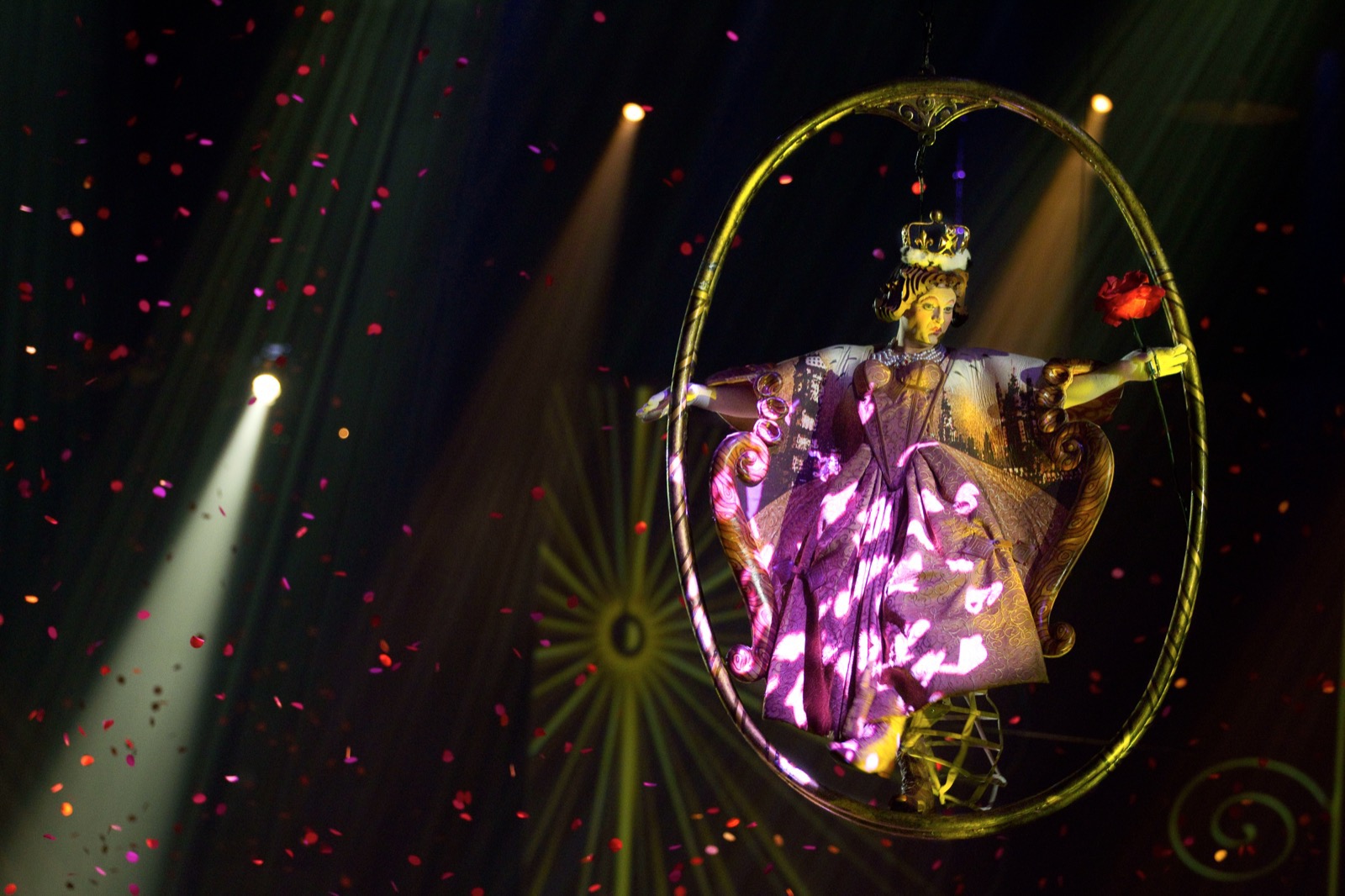
In July 2012 I photographed The Beatles LOVE by Cirque du Soleil live at The Mirage for my company Studio J Inc. LOVE opened on June 30, 2006, and later closed on July 7, 2024, after nearly two decades of theater in the round built around the music of The Beatles. This post is live show photography only. Cirque PR finals and campaign tear sheets live in my Cirque advertising photography post.
Nobody at LOVE was waiting on me. The cast ran the show exactly as they would for any sold out house, and the lighting designer built every cue for the audience in the round, not for my lens. I couldn’t ask for a pose, I couldn’t stop the act, and I never got a second take. Whatever happened in that theater happened once, and either I caught it or it was gone.
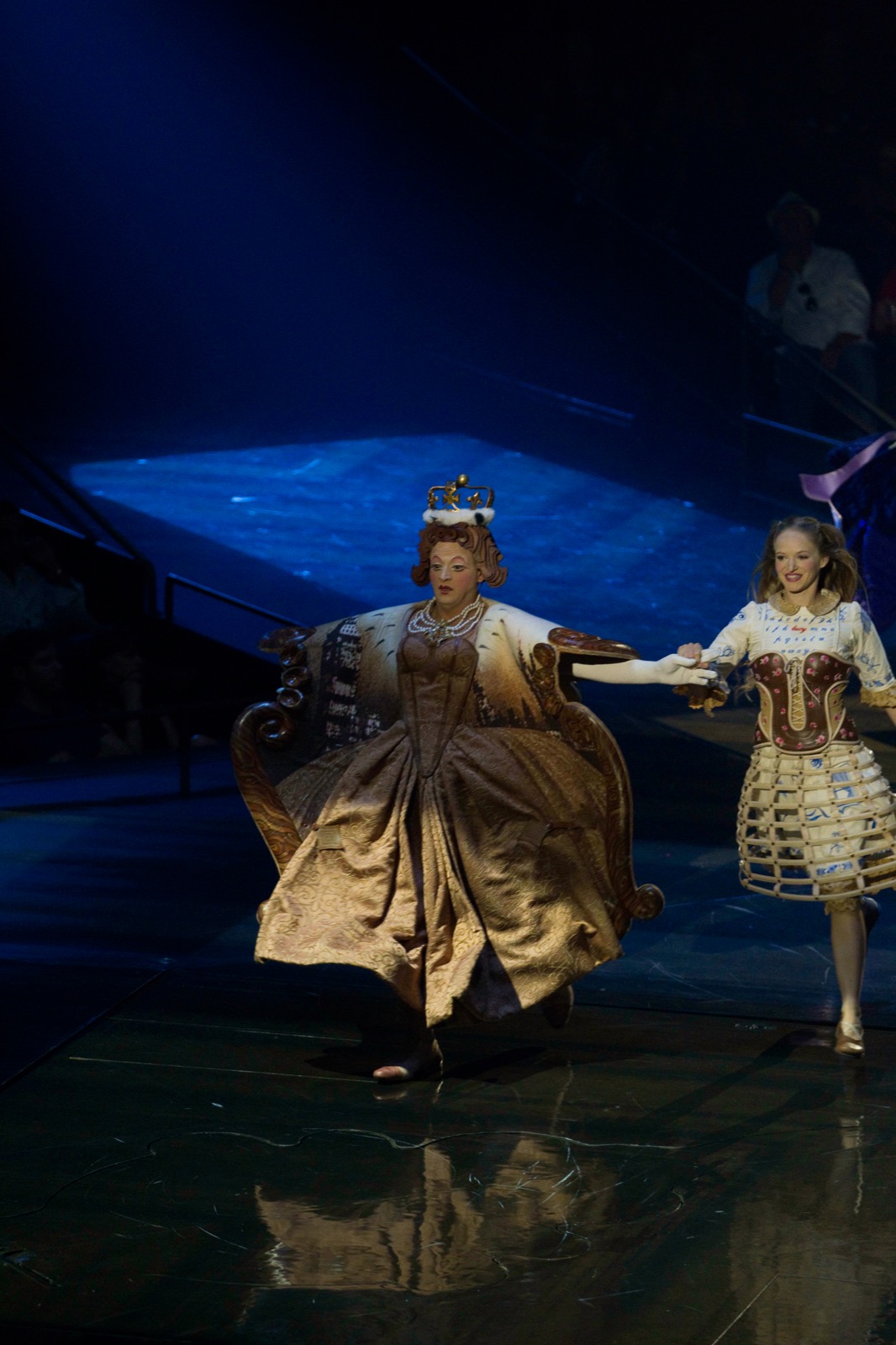
Live show photography without flash is a discipline. The stage light is the only light, the haze turns beams into lines, and the long lens has to find the peak moment before the cue moves on. I stay present through the act, reading the choreography so I am already framed when the rose petals, the confetti, or the outstretched hand arrives.
People see the finished frame and think it was easy. It isn’t. Long before the house goes dark I already have my exposure worked out. My ISO has to be high enough to pull detail out of a black theater without falling apart when a spotlight hits a white costume, and my shutter has to be fast enough to stop a flip, a spin, or a performer swinging out on a rope.
The camera settings are only half of it. The equipment has to keep up too. At LOVE I worked with my 70 to 200mm f/2.8 zoom wide open the whole night. Live action needs f/2.8 glass, period. If you show up to a show full of movement with a lens that tops out at f/5.6, you are fighting the light all night and you will lose.
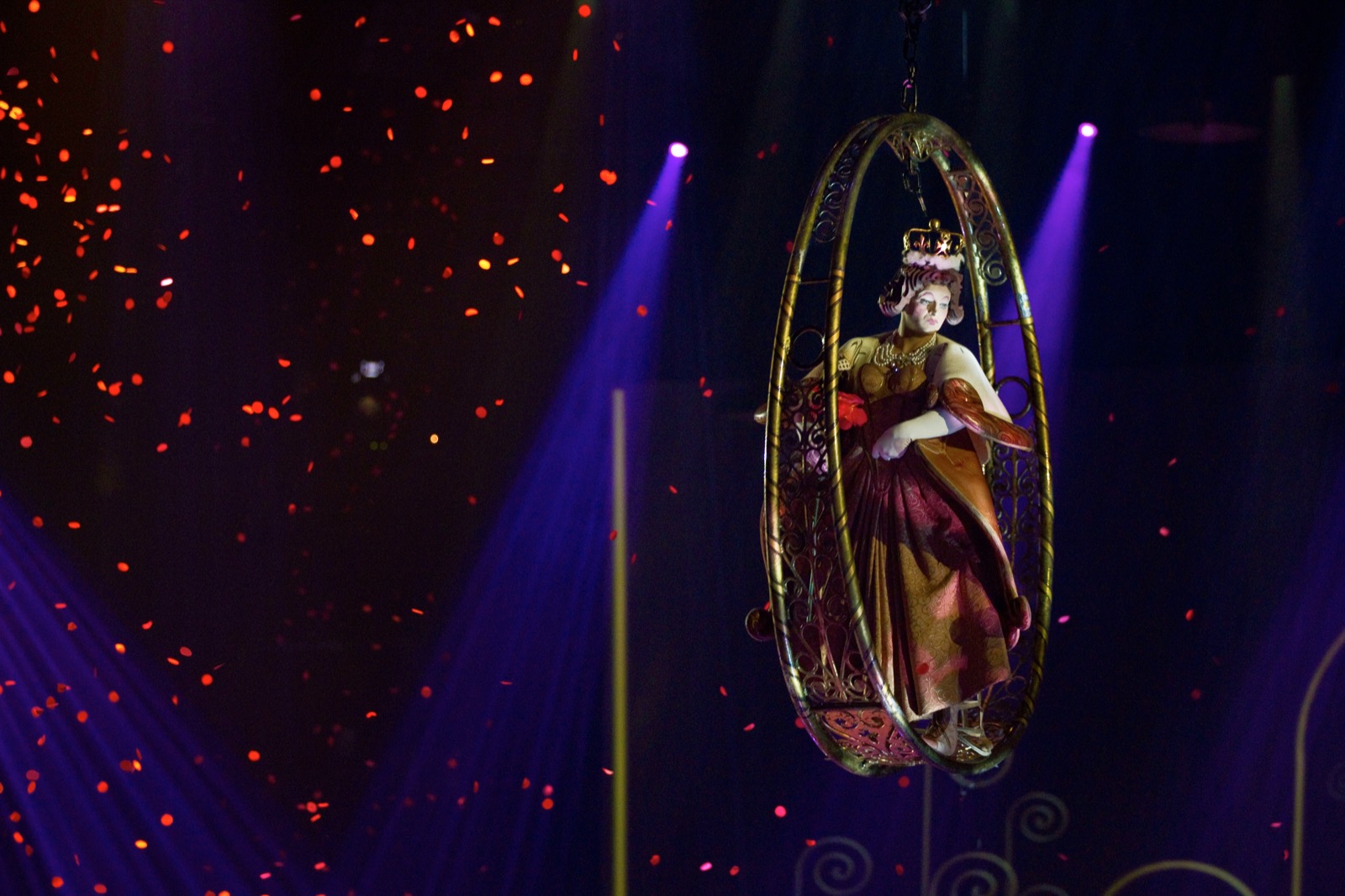
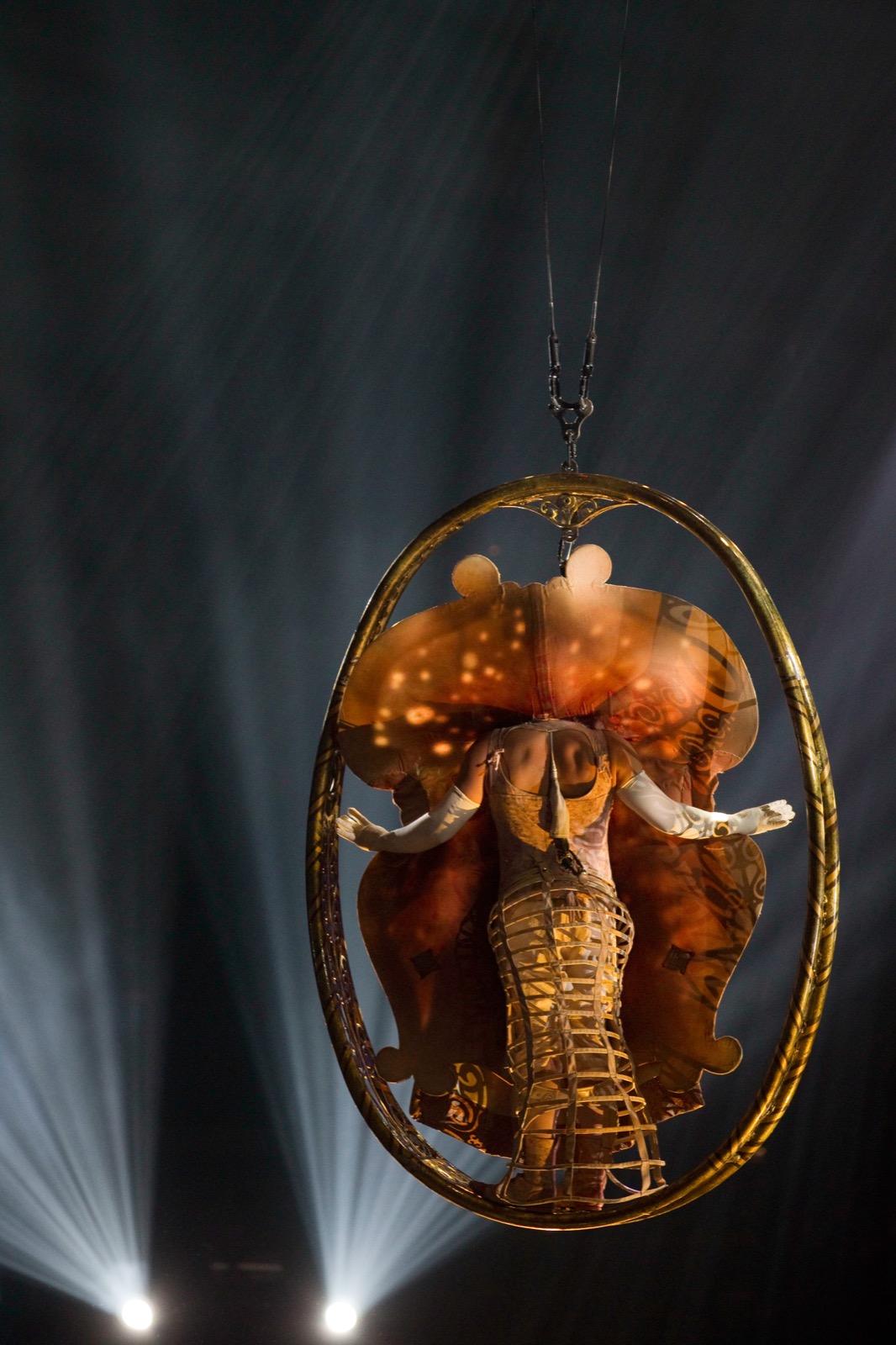
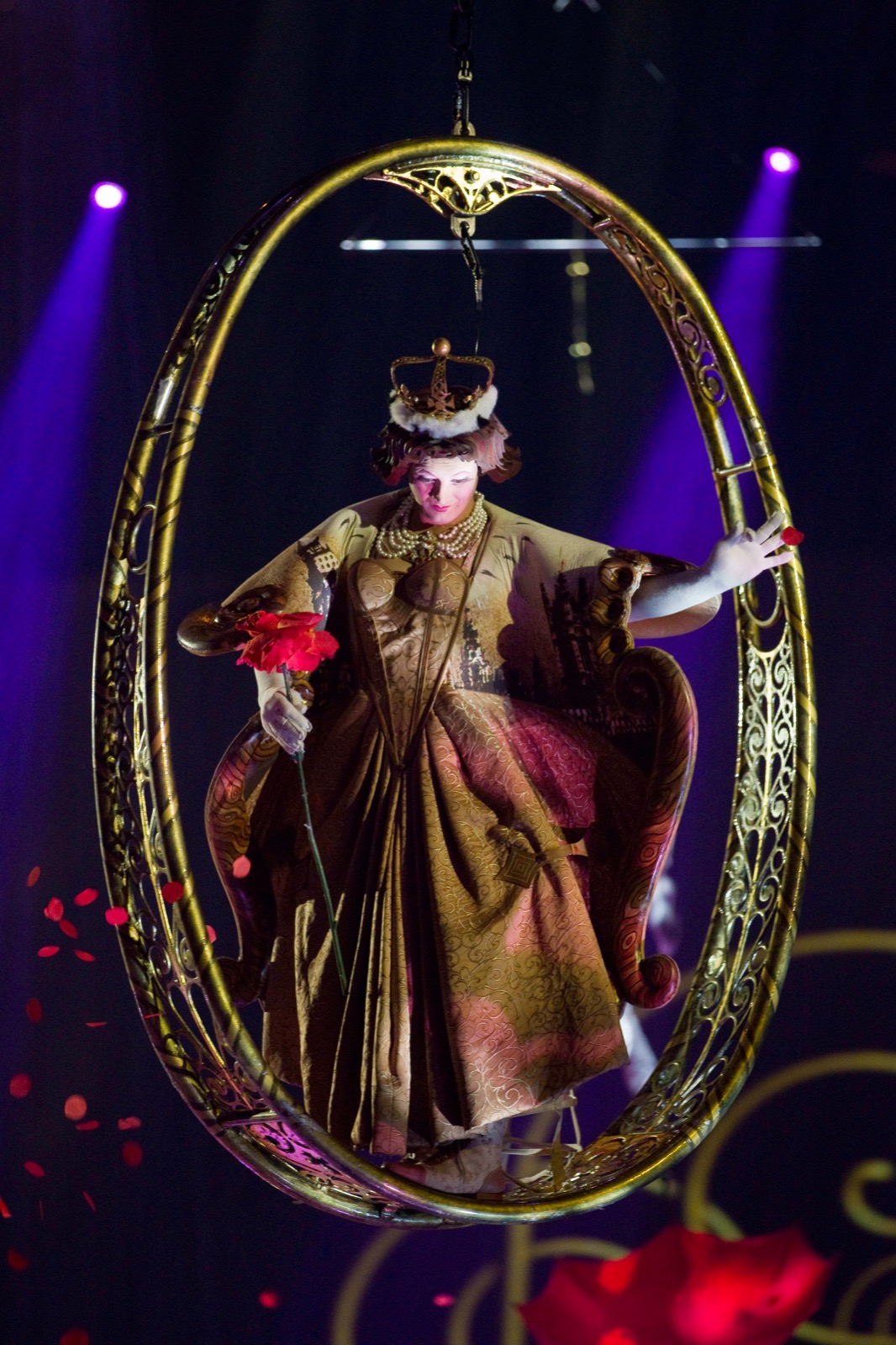
The aerial queen in the golden hoop is the heart of this gallery. Confetti hangs in the purple beams, and the costume has to stay sharp while the theater falls away into black. The finals frames from that night still carry the finish Cirque expects when a live cue is frozen cleanly.
The light at LOVE never sits still. One moment the stage is bathed in a cool blue wash, the next a warm follow spot lands on the aerial queen. I’m adjusting as the cues roll, reading what the next look will be before it arrives, and shooting RAW so I can bring every color temperature back to the right place later.
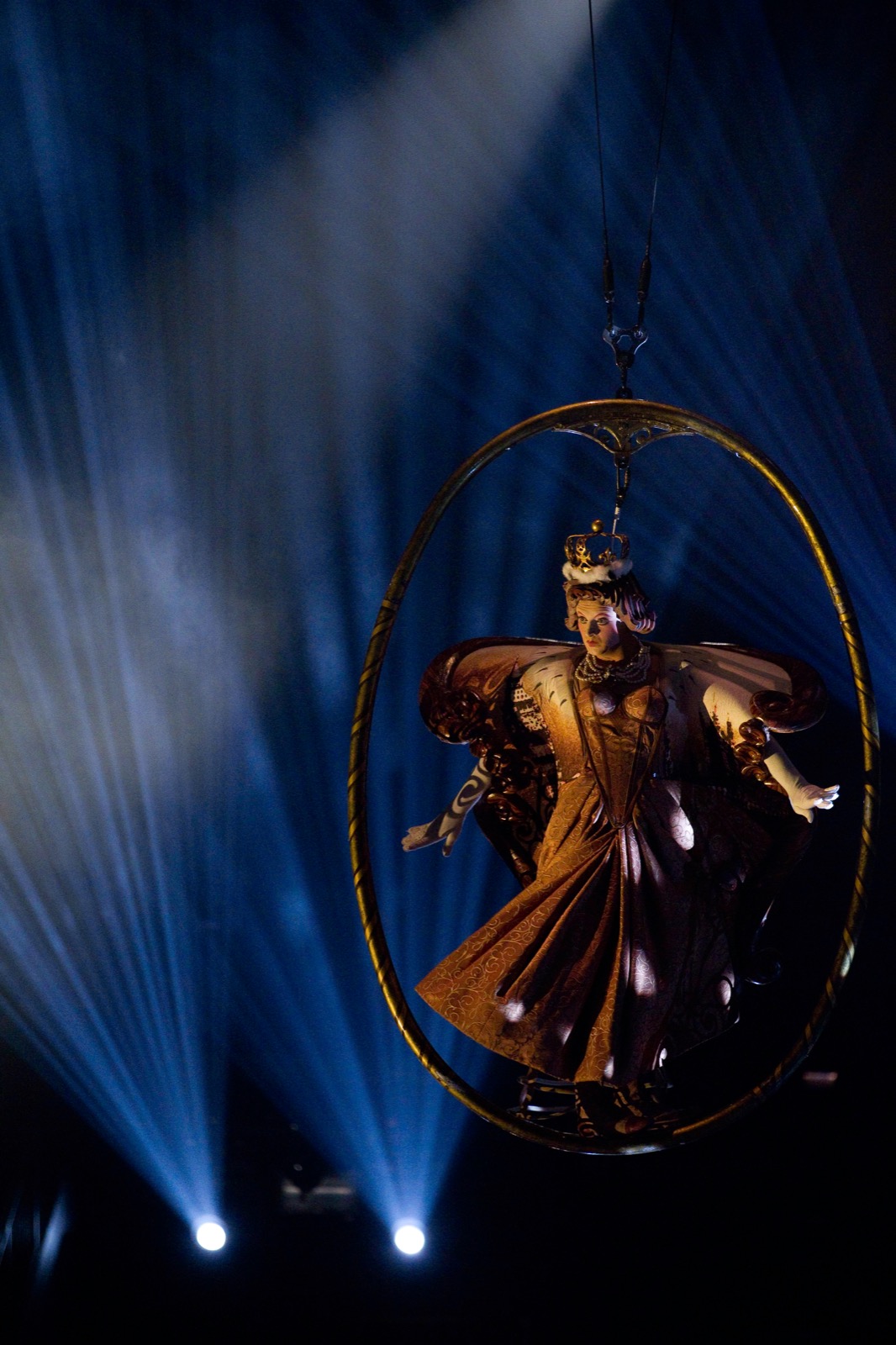
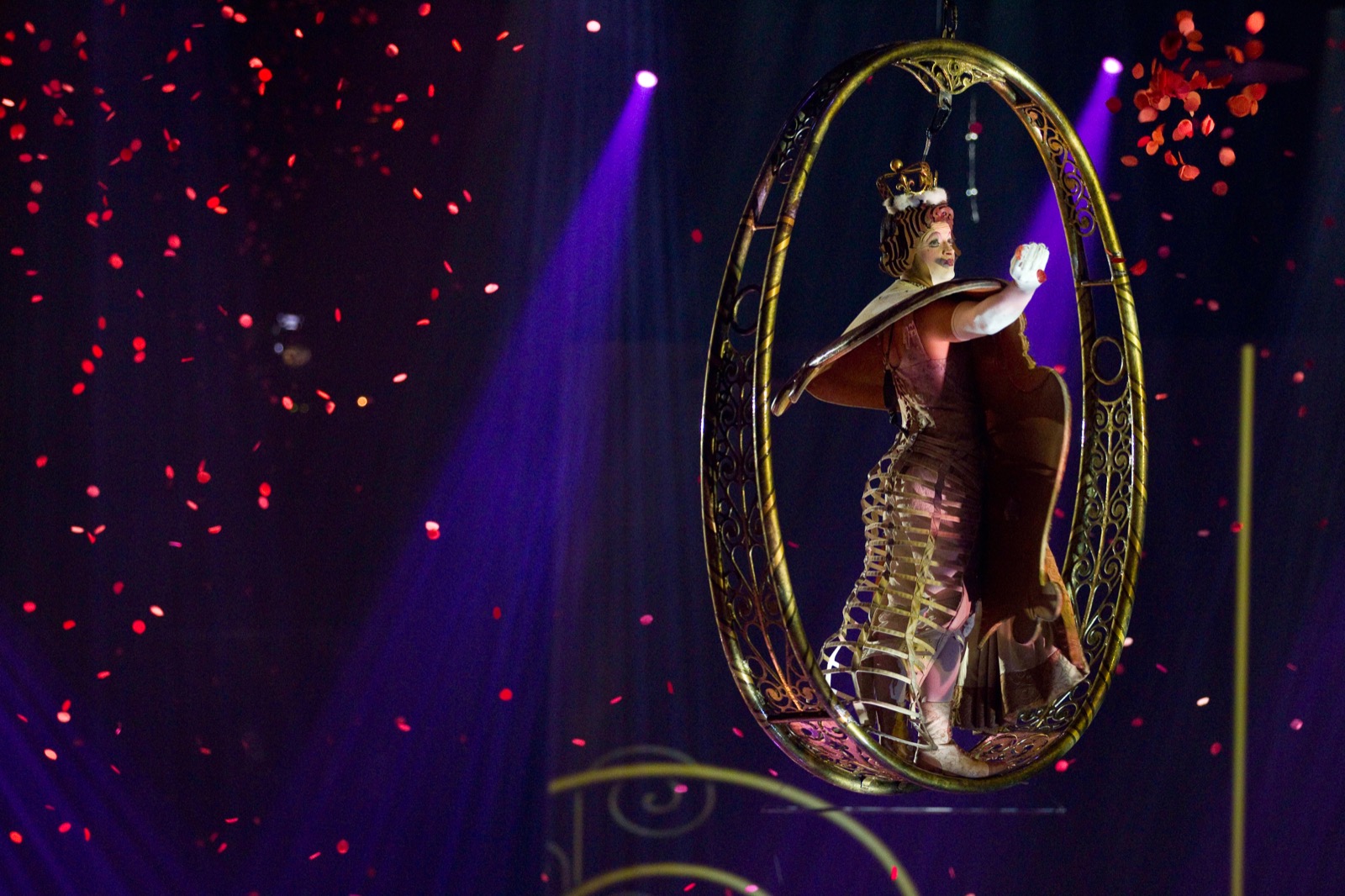
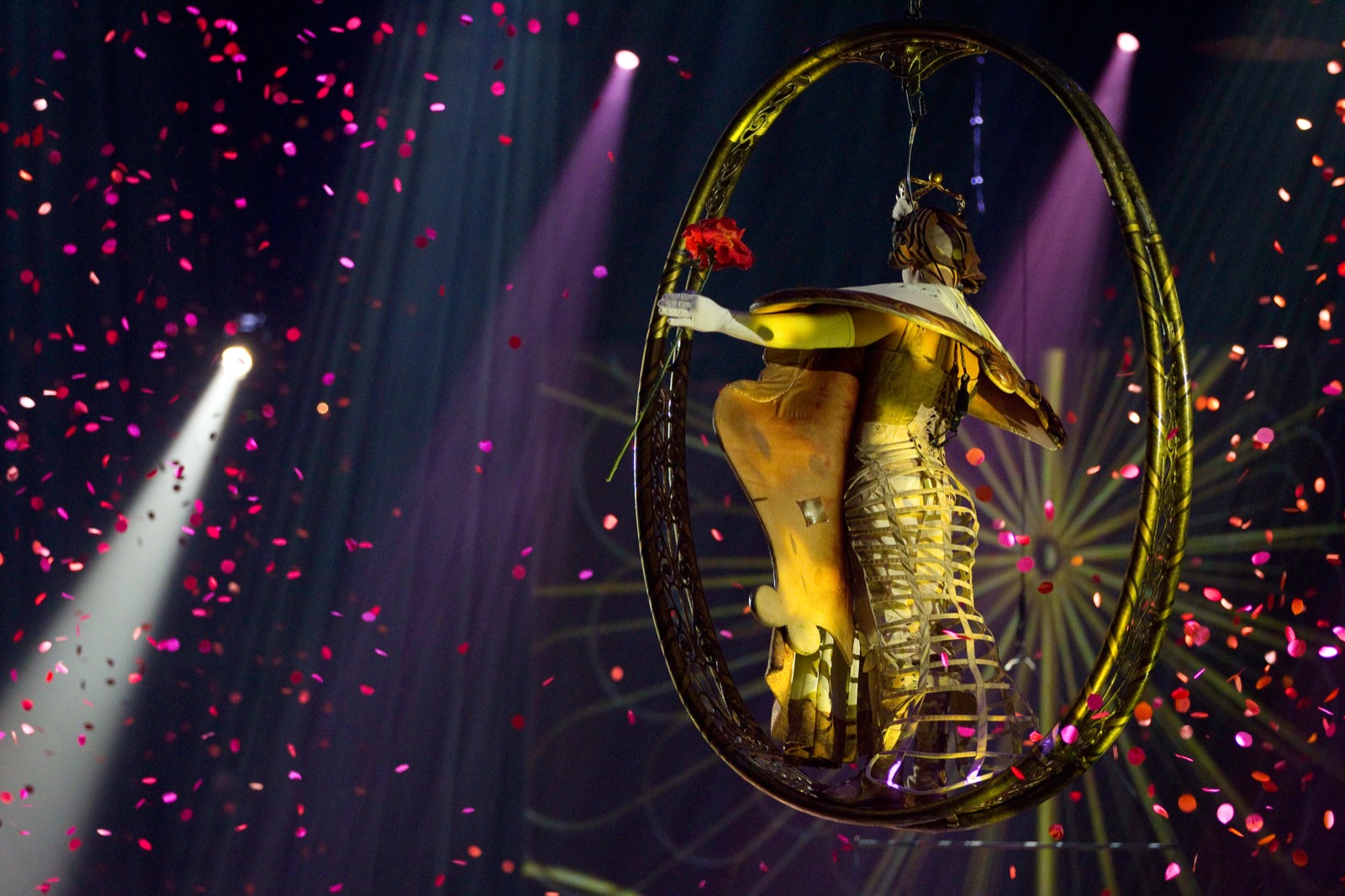
From behind the hoop the silhouette becomes architecture. Spotlights climb through the haze, the cage skirt catches the warm key, and the long lens isolates the apparatus from the rest of the theater. That isolation is how a Cirque moment becomes a photograph instead of a wide production still.
Shutter choice matters more than most people think. Back in 2012 I was shooting a Canon EOS 1D Mark IV, so I had a mechanical shutter. It froze the action cleanly, but it is audible, so I picked my moments to stay respectful of the audience. On today’s mirrorless bodies an electronic shutter can go completely silent, yet it brings its own risks: rolling shutter can bend a fast moving performer, and stage LED fixtures can throw banding across the frame. I decide which one I’m using before the show starts, never in the middle of a cue.
My files from that July 2012 night tell the story. Every frame in this gallery was made at f/2.8 with ISO set between 2000 and 2500, at shutter speeds from 1/100 to 1/250 of a second, with the lens reaching from 120mm to 200mm to pull the aerial work in close. Those numbers are a balancing act. Go any slower and the motion smears; push the ISO any higher on that camera and the noise starts eating the costume detail.
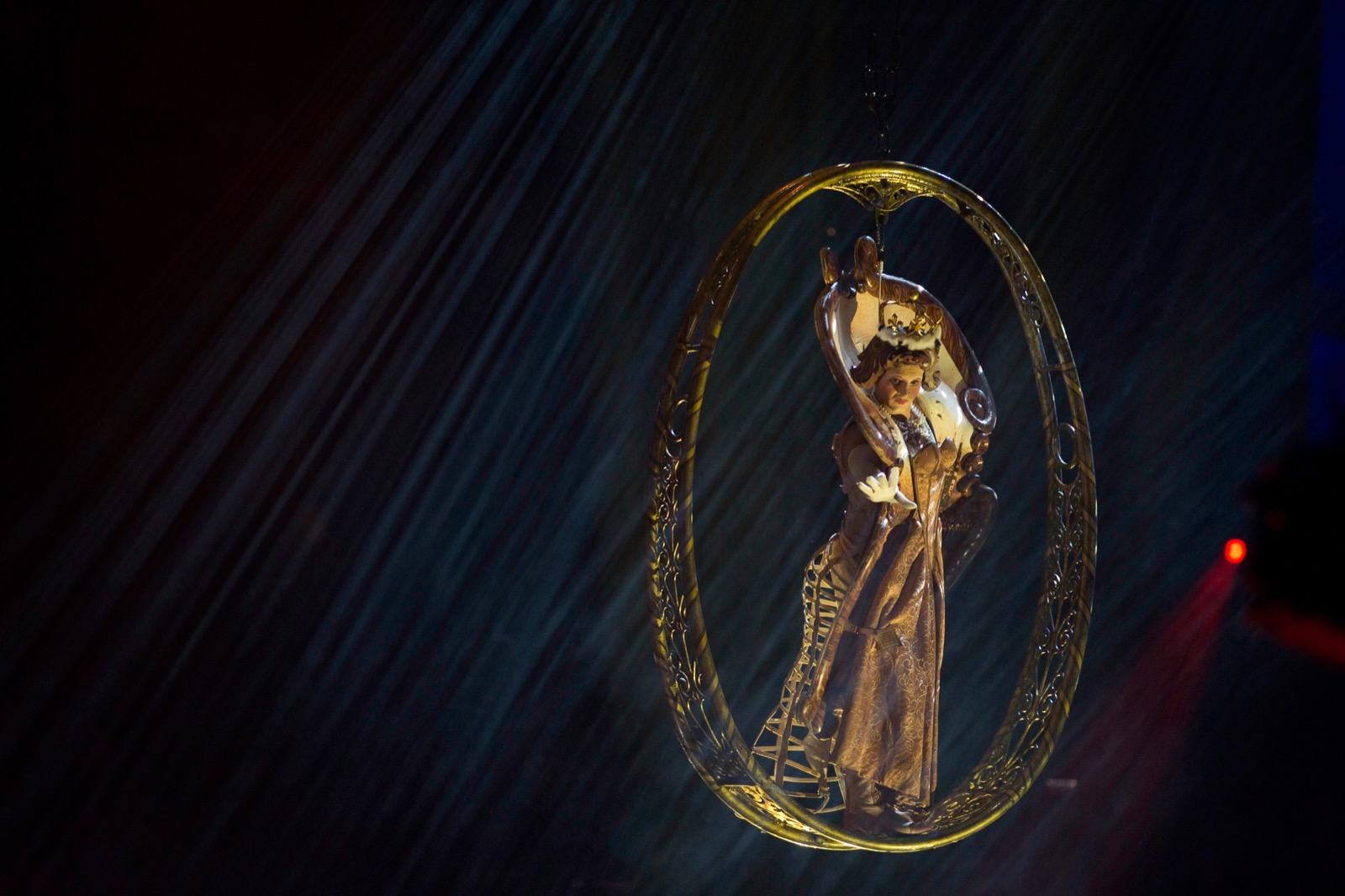
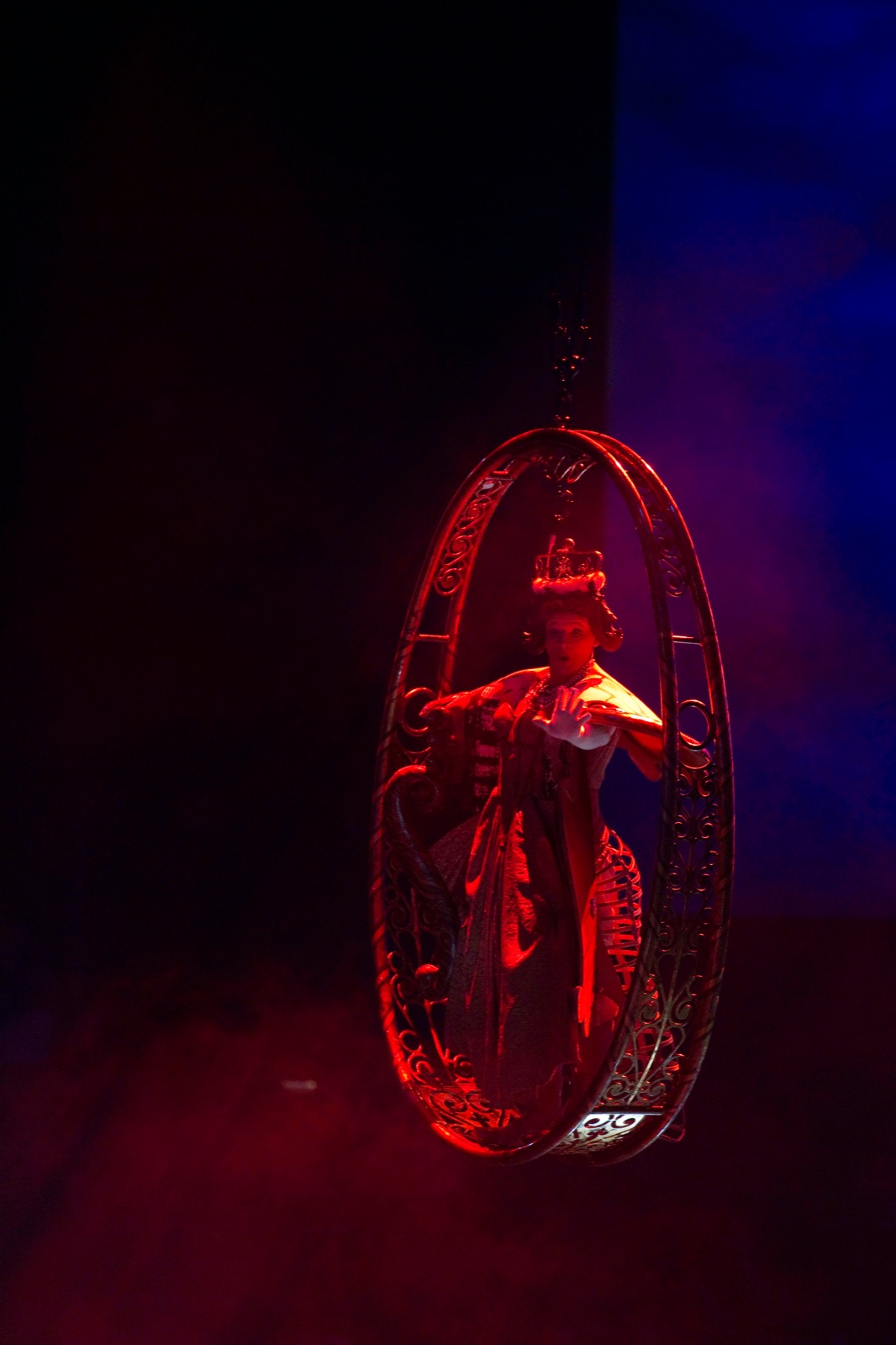
Not every frame is aerial. On the stage floor, character work under a blue wash still needs timing. Expressions change in a fraction of a second, and I wait for the glance that sells the story before the blocking turns away.
My Cirque advertising work is a completely different animal. On those shoots we choreograph the moment, art direct every element, and refine the light until the frame is perfect. A live night like this one gives you none of that control. You read the show, you trust your preparation, and you earn every frame in real time. If you want polished promotional imagery, that’s an advertising shoot. If you want the truth of the performance, you hire a photographer who knows live show work.
Studio J Inc. has been capturing architectural photography for 26 years in Las Vegas and around the world. If you have any questions about this project, or about a similar upcoming project, please don’t hesitate to contact Eric Jamison.
0 Comments